


The short answer: to care for a snake plant, give it bright, indirect light, water only after the soil has dried out, and grow it in a gritty, fast-draining mix in a pot with drainage holes. Snake plants (Dracaena trifasciata, also called mother-in-law’s tongue) are drought-tolerant succulents that store water in their leaves and rhizomes, so they handle neglect far better than too much attention.
This guide covers the full routine, from light and watering to repotting, propagation, and troubleshooting. If you’ve seen the plant sold as Sansevieria, that is the same plant: it was moved into the genus Dracaena after botanists revised the classification, and many nurseries and older guides still use the old name. Sansevieria care and Dracaena trifasciata care are the same thing.

Snake Plant Care at a Glance
| Factor | What the plant needs |
|---|---|
| Light | Bright, indirect light for best growth; tolerates low light with slower growth |
| Water | Only when the soil is dry through the pot; frequency varies with conditions |
| Soil | Gritty, fast-draining mix, such as cactus mix with extra perlite or pumice |
| Temperature | About 15-29°C (60-85°F); protect from cold below about 10°C (50°F) |
| Humidity | Normal household humidity; no misting needed |
| Fertilizer | Optional; diluted, and only in the growing season |
| Toxicity | Listed by the ASPCA as toxic to cats and dogs |
How to Care for a Snake Plant
Snake plant care comes down to three habits: light, restraint with water, and drainage.
- Light: Put it somewhere bright. It survives dim rooms but grows best with good light.
- Water: Check the soil first, and water thoroughly only when it has dried out.
- Drainage: Use a pot with drainage holes and a loose, gritty mix. Waterlogged roots are the most common reason snake plants decline.
Snake plants are native to tropical West Africa, and their thick, upright leaves and underground rhizomes store water. That is why they tolerate missed waterings but not soggy soil. Most of the advice below follows from that one trait.
Snake Plant Light Requirements
Snake plants grow best in bright, indirect light but tolerate low light. Place the plant near a bright window, and protect it from harsh, prolonged direct sun through glass.
- Ideal light: Bright light without hours of intense direct sun produces the strongest growth and the best leaf color.
- Low-light conditions: The plant can survive in dim spots, which is why it’s so common in offices and hallways. Expect slow growth, and note that variegated types can lose some of their pattern. A low-light plant also dries out more slowly, so water less often.
- Direct sunlight: Gentle morning or evening sun is usually fine. Strong midday or afternoon sun through glass can scorch leaves, especially if the plant was previously in shade. Move it toward brighter light gradually.
- Best placement: Light varies with your climate, window size, nearby buildings, and trees, so judge by what you see rather than by compass direction. A spot where you could comfortably read without a lamp is a good starting point. If the plant stretches, leans, or stops growing, it likely needs more light.
How Often to Water a Snake Plant
There is no correct number of days between waterings. Water a snake plant when the soil has dried out, and check the soil before every watering. Light, temperature, pot size, soil mix, and season all change how quickly the pot dries. As a rough guide, a plant in bright light during the growing season may need water every two to four weeks, and a plant in a dim room in winter may go much longer.
How to check the soil
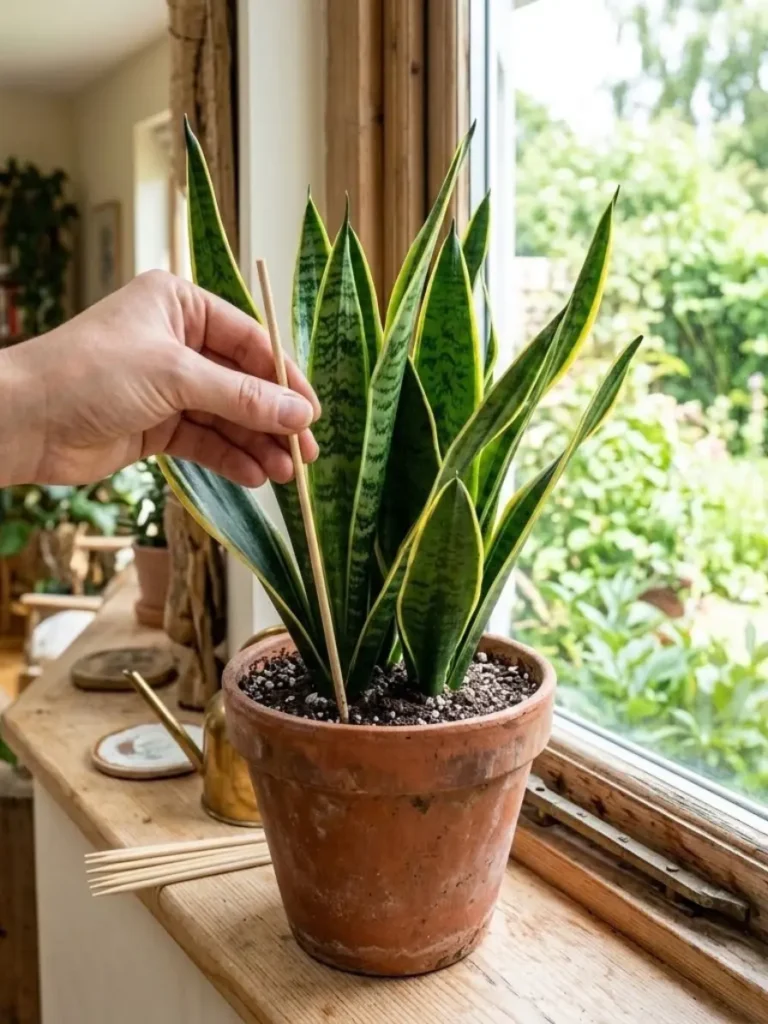
- Push a wooden skewer or your finger several centimeters into the soil. If it comes out dry and clean, the pot is ready.
- Lift the pot. A dry pot feels noticeably lighter than a freshly watered one.
- Check near the bottom of the pot, since the surface dries first. Terracotta pots dry faster than glazed ceramic or plastic.
How to water correctly
Water slowly around the base until water runs out of the drainage holes, then let it drain fully and empty the saucer. Frequent small sips encourage shallow roots and leave the lower soil damp. Water the soil rather than pouring into the leaf rosette, where moisture can sit and cause rot.
Winter watering
Growth slows in cool, low-light months, so the soil stays wet longer. Water less often, and keep checking the soil rather than switching to a fixed schedule.
Signs of overwatering
- Soft, mushy leaf bases or leaves that collapse
- Yellowing leaves
- Soil that stays damp for many days
- A sour or rotten smell from the pot
Signs of underwatering
- Wrinkled or rippled leaves
- Leaves that curl inward or look thinner
- Dry soil that has pulled away from the pot edge
Because the plant stores water, underwatering is usually easier to recover from than overwatering.
Best Soil for a Snake Plant
The best soil for a snake plant is loose, gritty, and fast-draining. Standard potting soil alone holds too much moisture for most indoor conditions.
A reliable mix is a commercial cactus or succulent mix with extra perlite, pumice, or coarse grit added. Many growers use roughly two parts cactus mix to one part perlite or pumice. The exact ratio matters less than the result: water should pass through quickly and the pot should dry in a reasonable time.
Drainage holes are essential. If you like a decorative pot without holes, keep the plant in a plastic nursery pot inside it, and empty any water that collects after watering.
Temperature and Humidity
Snake plants prefer typical indoor temperatures of about 15-29°C (60-85°F) and tolerate dry household air. They are not frost-tolerant, and cold combined with wet soil is a common cause of damage.
- Keep plants away from cold drafts, single-pane windows in winter, and air-conditioning vents.
- Cold damage appears as soft, water-soaked, or discolored leaves.
- Skip misting. Normal humidity is enough, and wet foliage and damp soil add risk without benefit.
How to Fertilize a Snake Plant
Snake plants need very little fertilizer. If you want to feed yours, use a balanced houseplant or cactus fertilizer diluted to half the label strength, a few times during spring and summer. Skip feeding in fall and winter, and avoid fertilizing very dry soil. Too much fertilizer can cause salt buildup and leaf-tip burn, so under-feeding is the safer mistake. If the plant is growing steadily, it may not need feeding at all.
Choosing the Right Pot
Choose a sturdy pot with drainage holes that is only slightly larger than the root ball. Snake plants tolerate being somewhat pot-bound, so they don’t need frequent upsizing.
- Size: About 2-5 cm (1-2 inches) wider than the roots. A very large pot holds extra damp soil that stays wet too long.
- Material: Terracotta dries faster and suits people who tend to overwater. Glazed ceramic and plastic hold moisture longer.
- Stability: Tall varieties can tip over in light pots, so a heavier base helps.
When and How to Repot a Snake Plant
Repot a snake plant when it has outgrown its pot, not on a fixed schedule. Many plants go a few years between repottings. Signs it’s time:
- Roots circling the pot or growing out of the drainage holes
- A pot that is bulging or cracked
- A plant that tips over or has crowded itself out of the soil
- Water that runs straight through or won’t soak in
Spring or early summer is the best time, when the plant is growing actively.
- Water lightly a day or two before, or make sure the soil is just slightly dry, so it comes out of the pot easily.
- Slide the plant out and shake off loose old soil.
- Trim any black, mushy, or foul-smelling roots with clean scissors.
- Set the plant at the same depth in the new pot with fresh, gritty mix.
- Wait several days to a week before watering to let any damaged roots dry and callus.
How to Propagate a Snake Plant
Division is the most reliable way to propagate a snake plant. Leaf cuttings also work but take longer.
Division
Remove the plant from its pot and separate sections of the rhizome, making sure each piece has roots and at least one leaf or shoot. Use a clean knife if the rhizomes won’t pull apart by hand. Pot each division in gritty mix and water lightly after a few days.
Leaf cuttings
Cut a healthy leaf into sections about 5-10 cm (2-4 inches) long. Let the cuts dry for a couple of days, then insert each section into gritty mix with the bottom end (the end that was closer to the soil) pointing down. Keep the mix barely moist. Rooting and new shoots can take weeks to months.
Variegated varieties
Leaf cuttings from variegated types such as ‘Laurentii’ usually produce plants with plain green leaves, losing the yellow edge. Use division to keep the variegation.
Snake Plant Maintenance
Snake plants need little upkeep beyond occasional cleaning and removing damaged leaves.
- Pruning: Cut off dead, badly damaged, or mushy leaves at the base with clean shears. Don’t trim healthy leaf tips to “shape” the plant, since the cut end won’t regrow into a point.
- Cleaning leaves: Wipe leaves with a damp cloth every month or two. Dust reduces how much light the leaves can absorb.
- Rotating: Turn the pot occasionally if the plant leans toward a window.
Seasonal Snake Plant Care
Care changes with the seasons mainly because light and temperature change how fast the soil dries.
| Season | What to adjust |
|---|---|
| Spring | Growth picks up. Good time to repot, divide, and resume light feeding if you use fertilizer. |
| Summer | Most active growth. Water more often as the soil dries faster, and watch for sun scorch if you move the plant outdoors. |
| Fall | Growth slows. Stop fertilizing and bring outdoor plants inside before nights get cold. |
| Winter | Water sparingly, keep the plant away from cold windows and drafts, and keep it in as much light as possible. |
How to Tell if Your Snake Plant Is Healthy
A healthy snake plant has:
- Firm, upright leaves with consistent color for its variety
- Steady new growth in the growing season, even if it’s slow
- Soil that dries out between waterings
- Leaves without mushy areas, spreading spots, or visible pests
A plant that isn’t growing in winter or in low light is usually just resting, not unhealthy.
Common Snake Plant Problems
Diagnose by checking the soil, the leaf base, and the roots before changing anything. Several problems share symptoms, so the cause isn’t always obvious.
Yellow leaves (snake plant leaves turning yellow)
- Possible causes: Overwatering or poor drainage, root rot, a pot that stays wet in low light, natural aging of older outer leaves, or occasionally cold damage or severe underwatering.
- How to tell: Soft, mushy leaf bases and damp soil point to excess water. A single old outer leaf yellowing slowly is often normal.
- What to do: Check the soil and roots. If they’re wet or rotting, dry out the plant and repot in fresh mix. If the soil is dry and leaves are wrinkled, water thoroughly.
Brown leaves
- Possible causes: Sunburn, cold damage, inconsistent watering, mineral buildup, or damage that has already healed.
- How to tell: Sunburn appears as dry, tan or bleached patches on the side facing the window. Cold damage tends to look soft and dark.
- What to do: Adjust the light or temperature and trim badly damaged leaves. Brown areas won’t turn green again.
Curling leaves
- Possible causes: Underwatering, root problems, pests such as thrips or spider mites, or sometimes just the plant’s growth habit or a recent move.
- How to tell: Dry soil and wrinkled leaves suggest thirst. Check leaf undersides and bases for pests, and look for silvery streaks or tiny insects.
- What to do: Water thoroughly if dry. If pests are present, treat them (see below). If the soil is wet, check the roots.
Drooping leaves
- Possible causes: Overwatering or root rot, very low light, a pot that is too large, underwatering, or a top-heavy plant in a light pot.
- How to tell: Check the soil and the base of the leaves. Mushy bases suggest rot. Firm leaves that simply lean may be reaching for light or lacking support.
- What to do: Correct the cause: dry out wet soil, add light, or repot into a more stable, appropriately sized pot.
Wrinkled leaves
- Possible causes: Underwatering is most common. Damaged or rotted roots can also stop the plant taking up water, even when the soil is wet.
- How to tell: Dry soil points to thirst. Wrinkled leaves in damp soil suggest root trouble.
- What to do: If dry, water thoroughly and watch for recovery over several days. If wet, inspect the roots.
Root rot
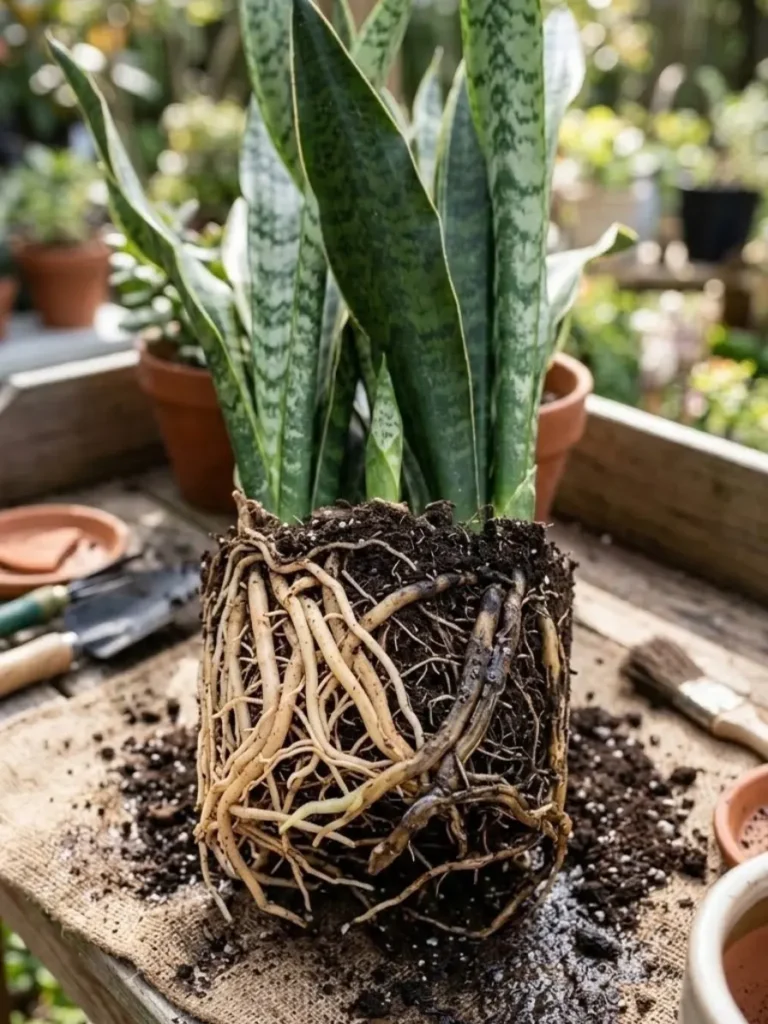
- Possible causes: Soil that stays wet, a pot without drainage, a mix that holds too much water, or cold, damp conditions.
- How to tell: Black, brown, mushy, or smelly roots, and soft leaf bases. Healthy roots are firm and pale.
- What to do: Remove the plant, cut away all soft or discolored roots and rotten leaf tissue with clean tools, let the plant dry for a day or so, and repot in fresh, gritty mix in a clean pot with drainage. Water sparingly while it recovers. If most of the roots and rhizome are gone, healthy leaves can be used for cuttings.
Snake Plant Pests and Diseases
Snake plants are fairly resistant, but mealybugs, spider mites, and thrips can appear, particularly on stressed plants.
- Mealybugs: White, cottony clusters between leaves or at the base.
- Spider mites: Fine stippling and sometimes fine webbing, more common in hot, dry conditions.
- Thrips: Silvery streaks or distorted growth.
- Fungus gnats: Small flies around the soil, usually a sign it stays too damp.
Isolate affected plants, wipe leaves with a cloth, and use insecticidal soap or horticultural oil following the label. Repeat treatments are usually needed. Fungal leaf spots and rots are mostly linked to wet soil and poor airflow, so fixing watering and drainage is the main prevention.
Popular Snake Plant Varieties
All of these share the same basic care, though compact and slow-growing types dry out and grow at different rates.
- ‘Laurentii’: Tall, upright leaves with yellow margins; the classic variety.
- ‘Black Gold’: Dark green leaves with golden edges.
- ‘Moonshine’: Pale, silvery-green leaves.
- ‘Futura Superba’ and ‘Hahnii’: Compact, rosette-forming types suited to shelves.
- Cylindrical snake plant: Round, spear-like leaves, often sold braided. Botanists now treat it as Dracaena angolensis.
- Whale fin: Broad, paddle-like leaves, now classified as Dracaena masoniana.
Are Snake Plants Toxic to Cats and Dogs?
Yes. The ASPCA lists snake plants as toxic to cats and dogs. The plant contains saponins, and chewing or eating it can cause drooling, nausea, vomiting, or diarrhea. Keep it out of reach of pets and young children, and contact a veterinarian or poison-control service if your pet eats some, especially if symptoms appear.
Do Snake Plants Flower?
Snake plants can flower, but it’s uncommon indoors. Mature plants may produce a tall spike of small, fragrant, greenish-white flowers, usually in spring or summer, and the blooms can drip sticky nectar. Flowering doesn’t reliably indicate that the plant is healthy or unhealthy. Plants that are slightly crowded or mature are more likely to bloom, and the spike can simply be cut off once the flowers fade.
Frequently Asked Questions
How often should you water a snake plant?
When the soil has dried out through the pot. That might be every couple of weeks in bright summer conditions and much less often in winter or low light. Check the soil rather than following a calendar.
Can snake plants survive in low light?
Yes, but they grow slowly and may lose variegation. They also need less water in low light because the soil dries more slowly.
How much sunlight does a snake plant need?
Bright, indirect light is ideal. Some gentle direct sun is fine, but long hours of strong sun through glass can scorch the leaves.
Why are my snake plant leaves turning yellow?
Excess water or poor drainage is a common cause, but not the only one. Check the soil moisture, the roots, and the base of the leaves, and consider light, cold, and normal aging of older leaves.
Why is my snake plant falling over?
Common causes include overwatering and root problems, low light causing weak growth, a pot too light or too big, or crowded roots. Check the roots, and repot into a stable pot if needed.
What is the best soil for a snake plant?
A fast-draining mix, such as cactus or succulent soil with added perlite or pumice, in a pot with drainage holes.
Can snake plants grow outdoors?
In frost-free climates, yes; sources give a range of roughly USDA zones 9-11 depending on the source. In cooler regions, they can spend summer outdoors in partial shade but should come inside before cold weather. Acclimate them gradually to avoid sunburn.
How do you propagate a snake plant?
Divide the rhizomes into sections with roots, or root leaf-section cuttings in gritty mix. Divide variegated types to keep their patterns.
Do snake plants really purify the air?
They appeared in NASA-linked research from the late 1980s, but those tests used small sealed chambers. A later review concluded that houseplants have a very small effect on air quality in real homes compared with ventilation. Grow them for their looks and easy care.
Sources
- Royal Horticultural Society: Sansevieria / snake plant care advice
- Missouri Botanical Garden Plant Finder: Dracaena trifasciata
- NC State Extension Plant Toolbox: Dracaena trifasciata
- ASPCA Animal Poison Control: snake plant toxicity listing
- Wolverton, B.C., et al. (1989), NASA Interior Landscape Plants for Indoor Air Pollution Abatement
- Cummings, B.E. & Waring, M.S. (2019), review of potted plants and indoor air pollutants, Journal of Exposure Science & Environmental Epidemiology
What do you think of blogging? Did it benefit you?
There are no reviews yet. Be the first one to write one.
[…] reading: Sansevieria Care: The Truth About Mother-in-Law’s Tongue & How to Keep It Alive – How to Care for a Snake Plant: Complete Care […]