


Table of Contents
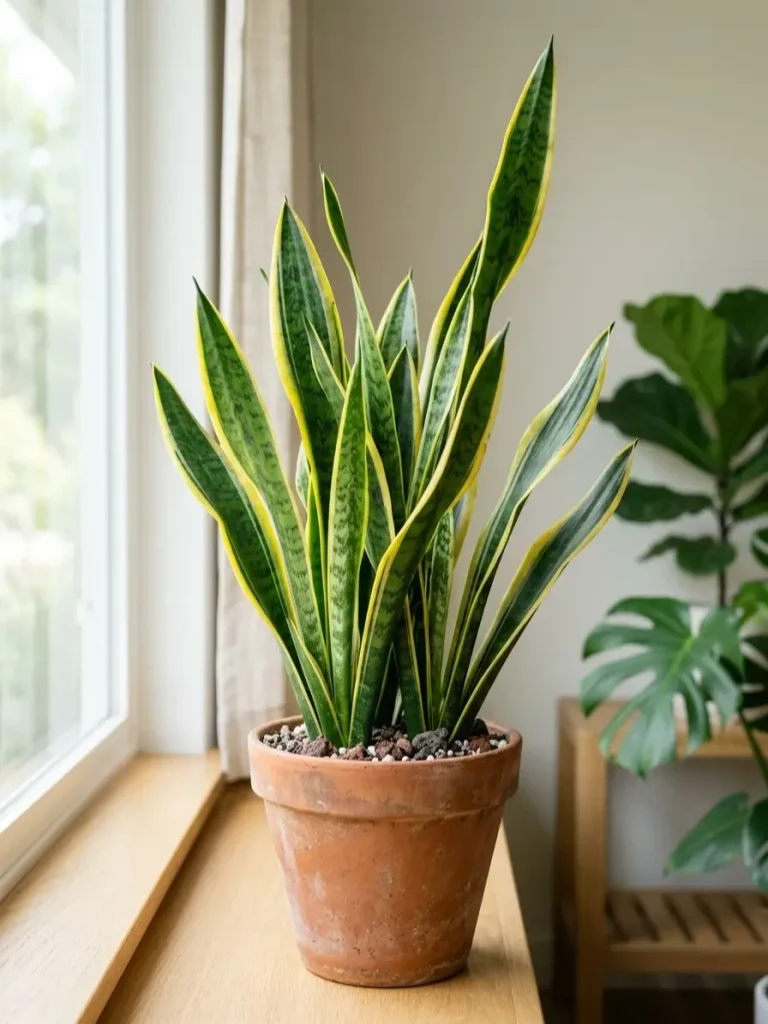
Knowing how often to water a snake plant is one of the most important parts of keeping it healthy. Although snake plants tolerate dry conditions, they can develop root rot when their roots remain in wet soil for too long.
The best watering schedule depends on how quickly your potting mix dries, not simply on the number of days since your last watering. Light, temperature, pot size, soil type, and drainage all affect how much water your plant needs.
As a general starting point, many indoor snake plants need water every 2–4 weeks during spring and summer and less frequently during winter. However, these intervals are estimates, not fixed rules. Always check the soil before watering.
Quick Answer: How Often Should You Water a Snake Plant?
For many indoor snake plants (Dracaena trifasciata, formerly Sansevieria trifasciata), the following intervals can help you estimate when to check the soil.
| Season | Approximate watering interval | What to check |
|---|---|---|
| Spring | Every 2–4 weeks | Water only when the potting mix has dried out. |
| Summer | Every 2–4 weeks | Check more frequently in warm, bright conditions. |
| Fall | Every 4–6 weeks | Reduce watering as growth and drying slow down. |
| Winter | Every 4–8 weeks, sometimes longer | Check the soil carefully before adding water. |
These ranges are practical starting points rather than scientifically established schedules for every snake plant. Some plants need water sooner, while others can remain dry for longer.
North Carolina State Extension advises allowing the soil to dry between waterings during the growing season and notes that watering every one to two months may be appropriate in winter. Your plant’s actual needs depend on its growing conditions.
The most reliable rule: Water when the potting mix has dried out, then allow excess water to drain completely.
How to Tell When a Snake Plant Needs Water
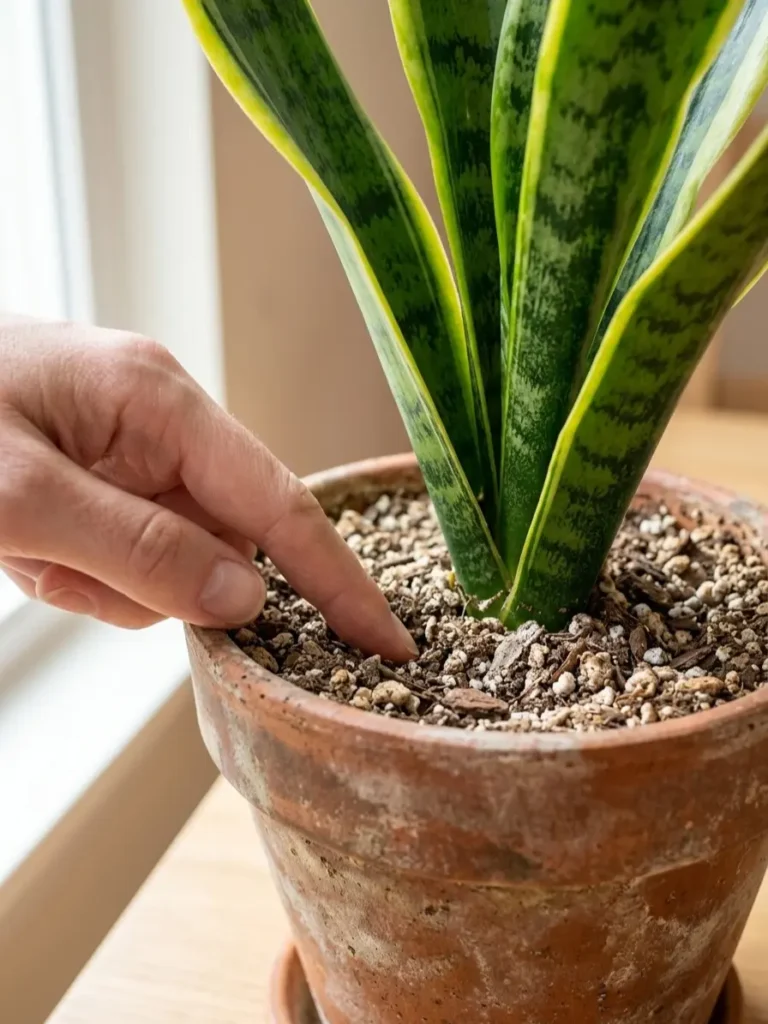
Rather than relying on a calendar, use these simple checks to determine whether your snake plant is ready for watering.
1. Check the Soil Moisture
Insert your finger or a clean wooden chopstick into the potting mix. In a typical 6-inch pot, checking approximately 2–3 inches below the surface is a useful starting point. For larger pots, check deeper into the root zone.
If the soil still feels damp, wait and check again later. If it is dry at that depth and the mix throughout the root zone has dried out, it is generally time to water.
Do not judge the entire pot by its dry surface alone. The lower portion of a large pot can remain moist long after the top has dried.
2. Lift the Pot
Pot weight provides another useful clue. A pot containing dry soil usually feels noticeably lighter than one holding moisture.
If you can, lift the pot shortly after watering and again when the soil dries. Comparing the difference helps you recognize when your plant needs water.
This method becomes more reliable with practice and works best when the plant remains in the same pot.
3. Tap an Unglazed Clay Pot
If your snake plant grows in an unglazed terracotta pot, gently tap the side. A relatively hollow sound can indicate drier soil, while a duller sound may suggest moisture remains.
This is only a supplementary check. Pot material, thickness, and soil composition can affect the sound, so combine it with a soil-moisture check.
4. Use a Moisture Meter Carefully
A moisture meter can help you assess soil conditions, but its readings are not always accurate. Results may vary with the device, soil composition, placement, and contact with the potting mix.
Use it as a secondary tool rather than the sole reason to water your plant.
Important: Do not wait for your snake plant’s leaves to wrinkle before checking the soil. Wrinkling can indicate water stress, but root damage can also prevent a plant from absorbing water properly.
How Often to Water a Snake Plant in Each Season
Spring: Resume Watering as Growth Increases
Spring often brings longer days and stronger light, which can encourage new growth and faster soil drying.
Start by checking your snake plant every couple of weeks. If the potting mix has dried out, water thoroughly. If it remains moist, wait longer.
A two-to-four-week interval may work for many indoor plants, but a snake plant in a cool room or a large pot may need less frequent watering.
Summer: Check More Often in Warm, Bright Conditions
During summer, a snake plant near a bright window may use water more quickly than one in a dim room. Warm temperatures can also increase the rate at which the potting mix dries.
Check the soil regularly rather than automatically watering every two weeks. If the mix remains damp, do not add more water just because the weather is warm.
Good drainage is especially important. A pot with drainage holes and a well-draining mix allows excess water to escape instead of collecting around the roots.
Fall: Reduce Watering as Conditions Change
As daylight decreases and temperatures cool, your snake plant may use less water. The potting mix may also take longer to dry.
Begin extending the time between waterings when your soil checks show that the plant is drying more slowly. Four to six weeks can be a useful estimate for some indoor plants, but it is not a requirement.
If your home remains warm and bright, your plant may continue to need water more frequently.
Winter: Water Less Frequently
Winter is a common time for overwatering snake plants because growth often slows and indoor soil may remain moist for longer.
North Carolina State Extension suggests that watering every one to two months may be appropriate during winter. Some plants in cool rooms, large pots, or moisture-retentive soil may need even less frequent watering.
However, winter does not automatically mean that a plant should receive no water. Heated rooms, warm windows, and nearby heating sources can change how quickly the potting mix dries.
Check the soil and water when it has dried out. Avoid keeping the roots continuously damp.
What Changes How Often You Need to Water?
Two snake plants in the same home may need different watering schedules. These are the main factors to consider.
Light Exposure
Plants receiving brighter light may use water more quickly than those in low-light locations.
A snake plant in bright, indirect light may need more frequent checks than one in a dim corner. However, light exposure alone does not tell you whether the soil is dry enough to water.
Temperature
Warm conditions can speed up soil drying, while cool conditions often slow it down.
Do not assume that every plant needs more water in summer or less in winter. Indoor temperatures and the location of your plant can make a significant difference.
Pot Size
A large pot can hold considerably more potting mix and moisture than a small one. If the pot is too large for the root system, the soil may take longer to dry.
Choose a pot that fits the root ball reasonably well and has drainage holes.
Pot Material
Unglazed terracotta allows moisture to evaporate through its porous walls, so its soil may dry faster than soil in a glazed ceramic or plastic pot.
This can affect watering frequency, although pot size, soil composition, and room conditions still matter.
Soil and Drainage
Snake plants need a well-draining potting mix. Dense soil that retains too much water can keep roots wet for extended periods and increase the risk of root rot.
A suitable cactus or succulent mix can be a practical option. Make sure the pot has drainage holes and that water does not remain in the saucer.
Humidity and Air Movement
Humidity and air circulation can influence how quickly moisture leaves the potting mix. Their effects depend on the other conditions around your plant.
Do not mist your snake plant as a substitute for watering. Misting does not reliably increase room humidity enough to meet a plant’s moisture needs.
How to Water a Snake Plant Correctly
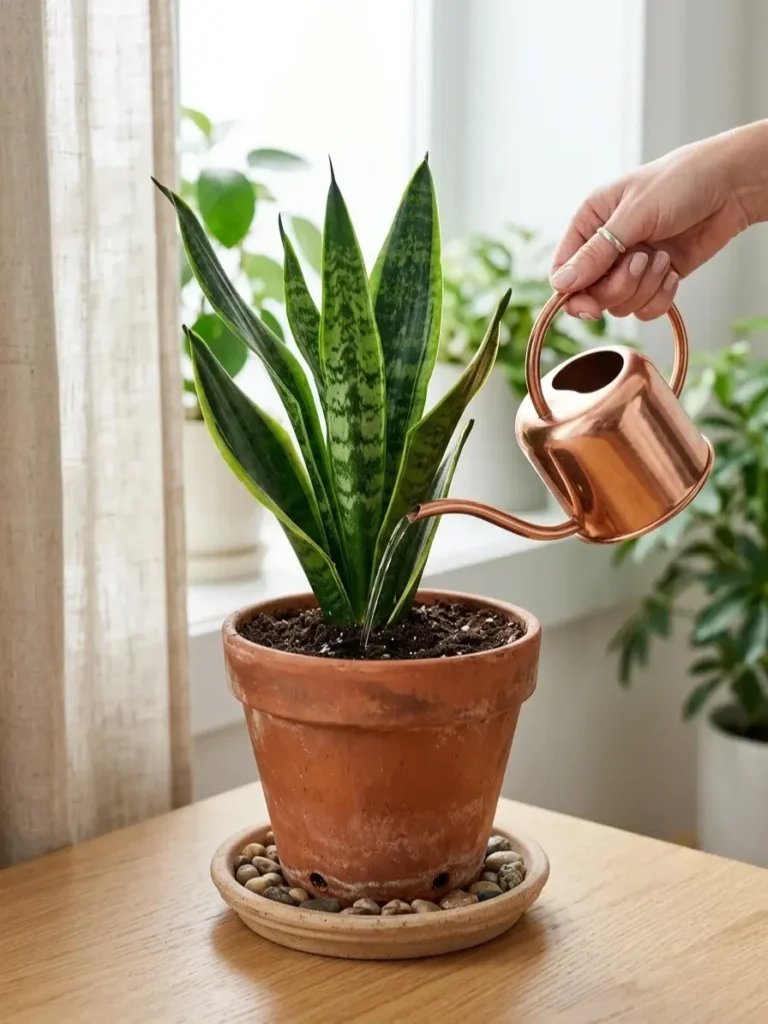
Once the soil has dried out, follow these steps to water your plant without leaving its roots sitting in excess moisture.
- Check the soil first. Confirm that the potting mix has dried out before watering.
- Use room-temperature water. Avoid extremes of temperature.
- Water the soil evenly. Apply water over the potting mix rather than repeatedly pouring it into the center of the leaf rosette.
- Water thoroughly. Continue until excess water flows through the drainage holes.
- Let the pot drain. Empty the saucer or outer container so the roots do not sit in standing water.
- Wait before watering again. Allow the potting mix to dry out before the next watering.
Thorough watering helps moisten the root zone and can flush accumulated salts from the potting mix. This is why giving a tiny splash of water every few days is usually less useful than watering thoroughly when the plant is ready.
What If Water Runs Straight Through the Pot?
Very dry potting mix can sometimes repel water. When this happens, water may travel down the sides of the pot without evenly moistening the soil.
If the mix is extremely dry, apply water slowly. If it immediately runs through, allow some time for absorption and water again. For a severely dried-out root ball, brief soaking may help rehydrate the mix, but remove the pot afterward and let it drain completely.
Do not use this technique on soil that is already wet.
Overwatered vs. Underwatered Snake Plants
The symptoms of watering problems can overlap, so check the soil and roots before deciding what your plant needs.
| Possible problem | Signs to look for | What to do |
|---|---|---|
| Overwatering | Persistently wet soil, yellowing leaves, soft or mushy leaf bases | Stop watering and check drainage and root health. |
| Underwatering | Very dry soil, curling or wrinkled leaves, dry leaf tips | If the root zone is dry, water thoroughly and let excess water drain. |
| Root damage | Wilting, yellowing, or poor growth despite moist soil | Inspect the roots rather than adding more water automatically. |
| Poor drainage | Water remains in the pot or soil stays wet for a long time | Check drainage holes and consider a better-draining potting mix. |
These symptoms are clues, not definitive diagnoses. Yellow leaves, for example, can result from several different problems.
What to Do If Your Snake Plant Is Overwatered
First, stop watering while you assess the soil and roots.
If the soil is wet for an unusually long time or the plant has soft, deteriorating leaf bases, gently inspect the root system. Healthy roots are generally firm, while rotting roots may be dark, soft, and unpleasant-smelling.
If root rot is present:
- Remove the plant carefully from its pot.
- Trim away clearly rotted roots with clean cutting tools.
- Remove severely damaged leaves where necessary.
- Repot the healthy plant in fresh, well-draining potting mix.
- Use a pot with drainage holes and avoid keeping the soil continuously wet.
Do not follow a rigid rule such as waiting exactly seven days before watering again. The appropriate timing depends on how much damage occurred, the condition of the remaining roots, and how quickly the new potting mix dries.
Frequently Asked Questions
Can I water my snake plant every week?
Weekly watering is often too frequent for an indoor snake plant, especially in low light, cool conditions, or moisture-retentive soil. Check the soil before watering and wait until the mix has dried out.
Is watering every two weeks enough for a snake plant?
It may be enough in some homes and growing conditions, but not in all of them. A warm, bright location and a small terracotta pot may dry faster than a large plastic pot in a cool room.
Should I water a snake plant less in winter?
Usually, yes, if cooler temperatures and reduced light cause the soil to dry more slowly. However, indoor heating and bright windows can change the plant’s water needs. Check the soil instead of following a fixed winter schedule.
Should I mist my snake plant?
Misting is unnecessary for routine snake plant care and does not reliably increase indoor humidity. Focus on suitable soil, correct watering, and good drainage.
Is bottom watering better than top watering?
Neither method is automatically better in every situation. Bottom watering can help rehydrate very dry potting mix, but it should not leave the pot standing in water indefinitely. Top watering is also effective when the soil is watered thoroughly and excess water drains away.
What is the best way to know when my snake plant needs water?
Check the moisture deeper in the potting mix, consider the pot’s weight, and observe how quickly the soil dries between waterings. Combining these checks is more reliable than relying on a calendar or leaf symptoms alone.
Final Thoughts
The best snake plant watering schedule is the one that matches your plant’s growing conditions. Spring and summer may require more frequent checks, while fall and winter often call for longer intervals between waterings.
Start with the seasonal estimates in this guide, but let soil moisture make the final decision. Water thoroughly when the potting mix has dried out, use a pot with drainage holes, and never leave your snake plant sitting in standing water.
With consistent soil checks and good drainage, you can reduce the risk of overwatering and help your snake plant grow well throughout the year.
For a broader overview of lighting, soil, and general maintenance, read our snake plant care guide.
Sources and Further Reading
- North Carolina State Extension: Snake Plant
- Clemson Cooperative Extension: Indoor Plants — Watering
- University of Illinois Extension: Mother-in-Law’s Tongue
- Royal Horticultural Society: Sansevieria trifasciata
- University of Maryland Extension: Diagnose Indoor Plant Problems
What do you think of blogging? Did it benefit you?
There are no reviews yet. Be the first one to write one.