


Table of Contents
Stop Killing the “Unkillable” Plant
Everyone says the mother in law’s tongue sansevieria thrives on neglect. That’s misleading. This succulent-like indoor plant tolerates neglect but thrives on specific care. If you’ve watched your supposedly indestructible snake plant turn mushy or collapse overnight, the problem isn’t you—it’s outdated advice. Let’s fix that with science-backed snake plant care guidance.
What is Mother-in-Law’s Tongue?

Before diving into care, here are the essential facts:
- Common Name: Mother-in-Law’s Tongue (Snake Plant)
- Scientific Name: Dracaena trifasciata (formerly Sansevieria trifasciata)
- Family: Asparagaceae
- Origin: Tropical West Africa (Nigeria to Congo)
- Key Characteristic: CAM Photosynthesis (releases oxygen at night)
- Growth Rate: 3-5 new leaves per year under ideal conditions
Why the Name Change Matters: While many still call it Sansevieria, botanists reclassified it as Dracaena in 2017 due to DNA sequencing. Understanding that your mother in laws tongue is actually a succulent-like Dracaena explains why it needs different care from typical houseplants.
Sansevieria vs. Dracaena: What Changed?
| Aspect | Old (Sansevieria) | New (Dracaena) |
|---|---|---|
| Genus | Sansevieria | Dracaena |
| Reasoning | Physical traits | DNA sequencing |
| Care Impact | None | Explains succulent nature |
Does the Snake Plant Really Purify Air? (The Science)
Let’s debunk the famous NASA Clean Air Study myth. Yes, mother in law’s tongue sansevieria appeared on that 1989 list, but here’s the truth:
The Reality:
- You’d need approximately 680 plants in a 1,500 sq ft home to replicate NASA’s sealed-chamber results
- Opening a window is 100 times more effective for air quality
- Modern 2024 research confirms minimal practical air purification
What It Actually Does:
- Releases oxygen at night (rare among houseplants)
- Adds humidity to indoor air
- Provides aesthetic and psychological benefits
Buy this plant for its beauty and resilience—not as an air filter.
Essential Snake Plant Care Guide
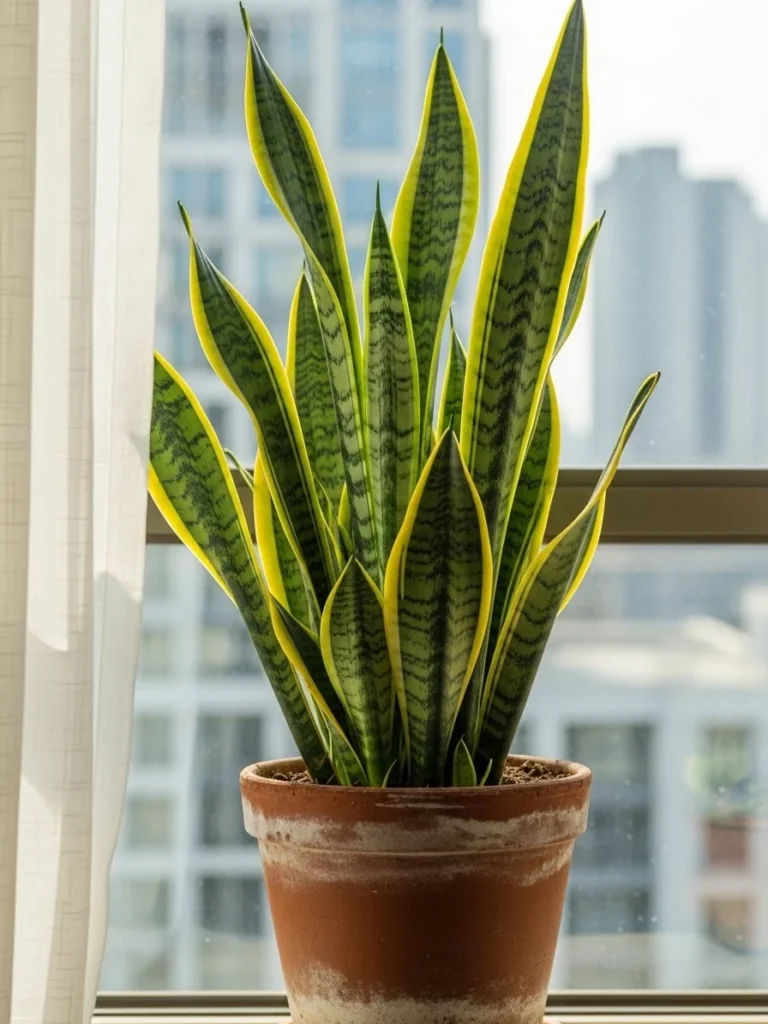
Light Requirements
Ideal: Bright, indirect light
Tolerance: Low light to full sun
- Low Light: Survives but grows slowly; may lose variegation
- Bright Indirect: Optimal growth; vibrant colors
- Direct Sun: Tolerated but leaves may bleach
Pro Tip: Rotate 90 degrees monthly to prevent leaning.
Watering (Where Most People Fail)
The golden rule: When in doubt, don’t water.
| Season | Frequency | Test Method |
|---|---|---|
| Spring/Summer | Every 2-3 weeks | Soil dry 2 inches deep |
| Fall/Winter | Every 4-6 weeks | Soil dry throughout pot |
The “Squish Test” for Diagnosis:
- Mushy and smelly? Root rot from overwatering
- Wrinkled and dry? Underwatering—water deeply
- Firm and upright? Perfect—maintain current schedule
Soil & Containers
Never use standard potting soil. Your mother in laws tongue needs fast drainage.
DIY Soil Mix:
- 50% succulent/cactus mix
- 30% perlite or pumice
- 20% coarse sand
Container Requirements:
- Drainage holes are mandatory
- Terra cotta pots ideal (wick away moisture)
- Avoid sealed decorative pots
Common Problems & Real Fixes
| Symptom | Cause | The Fix |
|---|---|---|
| Brown, mushy base | Root rot | Remove affected leaves; repot in dry soil |
| Yellow, drooping leaves | Overwatering | Check soil; reduce watering by 50% |
| Wrinkled leaves | Severe underwatering | Deep water; establish regular schedule |
| Leaves falling over | Low light or root rot | Move to brighter spot; inspect roots |
| Brown leaf tips | Fluoride in water | Switch to filtered water |
Popular Varieties Worth Growing
Sansevieria trifasciata ‘Laurentii’ (The Classic) Yellow-edged leaves; grows 2-4 feet tall
Sansevieria ‘Moonshine’ Pale silvery-green leaves; compact growth
Sansevieria cylindrica Round, spear-shaped leaves; dramatic presence
Sansevieria ‘Whale Fin’ Massive paddle-shaped leaf; premium statement piece
Quick Care Tips
Temperature: 70-90°F ideal; minimum 50°F
Humidity: 30-50% (average home levels)
Fertilizing: Every 2-3 months in spring/summer only; use 50% strength
Repotting: Every 3-5 years; they prefer being slightly rootbound
Toxicity Warning: Highly toxic to cats and dogs. Contains saponins causing nausea, vomiting, and diarrhea. Keep out of pet reach or choose pet-safe alternatives.
Propagation Methods
Division (Fastest):
- Remove plant from pot
- Separate natural divisions at rhizomes
- Ensure each section has roots and 3-4 leaves
- Plant immediately
Timeline: New growth in 2-3 months
Leaf Cuttings (More Plants):
- Cut healthy leaf into 3-4 inch sections
- Mark the bottom (critical!)
- Let callus 24-48 hours
- Plant bottom inch in moist mix
Timeline: Roots in 3-4 weeks; shoots in 2-3 months
Note: Variegated varieties revert to solid green from leaf cuttings. Use division to maintain patterns.
Frequently Asked Questions
Q: Why are my leaves falling over?
A: Two causes: insufficient light (move to brighter location) or root rot from overwatering (inspect roots immediately for black, mushy sections).
Q: Can snake plants flower?
A: Yes, though rare indoors. Fragrant cream-colored blooms emerge when the plant experiences mild stress combined with optimal light.
Q: How fast do they grow?
A: Expect 3-5 new leaves annually under ideal conditions. Growth slows significantly in winter and low light.
Q: Should I mist my snake plant?
A: No. These plants don’t need extra humidity, and wet leaves promote fungal infections. Wipe leaves monthly with a damp cloth to remove dust.
The Bottom Line
The mother in law’s tongue sansevieria isn’t truly indestructible—it just forgives mistakes better than most plants. Master these fundamentals and you’ll enjoy years of architectural beauty:
- Water sparingly: Every 2-6 weeks depending on season
- Provide bright, indirect light for best growth
- Use well-draining soil in containers with holes
- Watch for texture changes as early warning signs
This modern approach to snake plant care combines botanical accuracy with practical troubleshooting. Your mother in laws tongue deserves better than generic advice—give it the specific care that makes it thrive.
Ready to expand your collection? Explore varieties like ‘Moonshine’ or ‘Whale Fin’ for unique textures and colors that elevate any space.
What do you think of blogging? Did it benefit you?
There are no reviews yet. Be the first one to write one.