


Table of Contents
If you’ve ever wondered why your Epipremnum aureum (commonly known as Pothos) is thriving one month and drooping the next, you’re not alone. Caring for a Pothos plant doesn’t require a green thumb—just an understanding of two critical factors: light and water, and how they work together.
The Quick Reference Guide: Your Pothos Care Snapshot
| Care Factor | The “Goldilocks” Zone (Ideal) | Warning Signs |
|---|---|---|
| Light | Bright, Indirect Light (East/West Window) | Too Low: Loss of variegation (color)<br>Too High: Scorched, bleached leaves |
| Watering | When top 50-75% of soil is dry | Under: Drooping, crispy edges<br>Over: Yellowing leaves, black stems |
| Temperature | 65°F – 85°F (18°C – 29°C) | Cold drafts cause leaf drop |
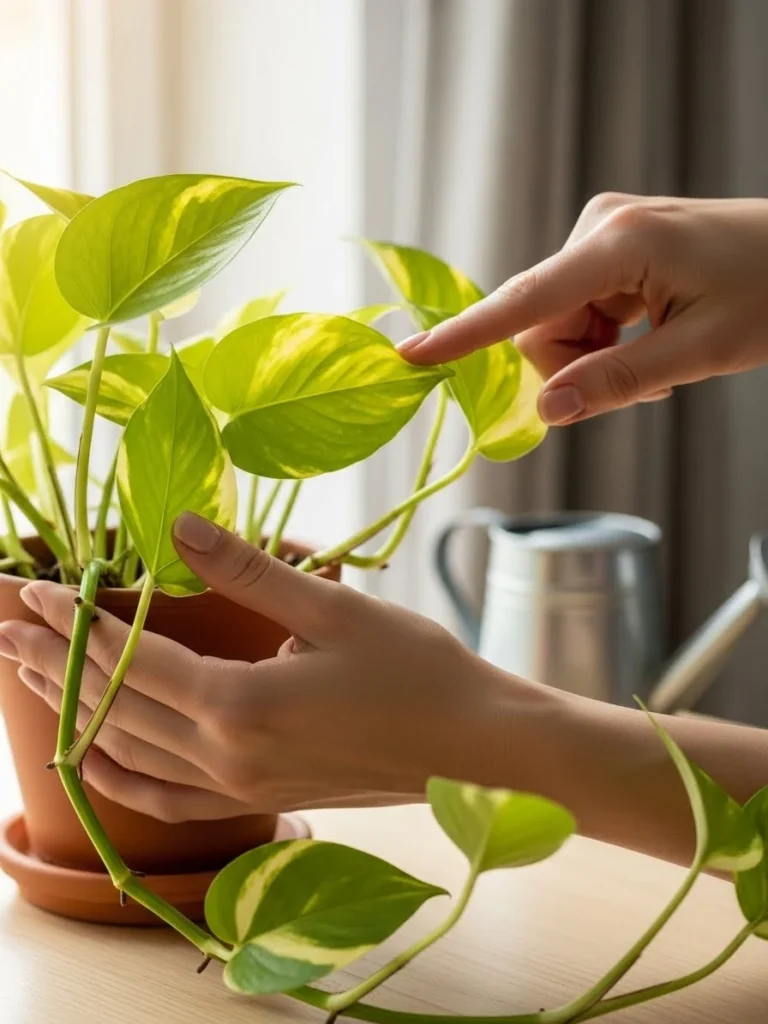
Understanding Pothos Light Requirements (Beyond “Medium Light”)
When most plant guides tell you that Pothos needs “medium light,” they’re not wrong—they’re just incomplete. Let me break down what your plant actually needs to thrive, not just survive.
Direct vs. Indirect Light Explained
Think of the sun like a spotlight at a theater. Your Pothos wants to be on the stage where it’s bright, but not standing directly in the spotlight beam where it gets scorched. Direct light means the sun’s rays hit the leaves without any barrier—this happens in south-facing windows or outdoors. Indirect light means the sunlight is filtered through curtains, bounces off walls, or reaches the plant from the side.
Here’s how window direction affects your Pothos:
- North-facing windows: Low light (survival mode, minimal growth)
- East-facing windows: Ideal! Gentle morning sun, bright indirect light the rest of the day
- West-facing windows: Good, but watch for intense afternoon heat
- South-facing windows: Too intense—use sheer curtains to diffuse the light
Can Pothos Live in No Light?
This is the office plant myth. Yes, Pothos can survive in low-light conditions longer than most houseplants—that’s why they’re ubiquitous in windowless offices. However, there’s a significant difference between surviving and thriving.
In very low light conditions:
- Growth slows to almost nothing
- Variegation disappears (those beautiful white, yellow, or cream markings fade to solid green)
- Stems become leggy and sparse
- The plant becomes more susceptible to root rot because photosynthesis rates drop
The science simplified: Plants use light energy to convert water and carbon dioxide into food through photosynthesis. Less light = less food production = a struggling plant that can’t properly process the water you’re giving it.
Watering Frequency: Why the Calendar Is Wrong
Stop watering every Friday. Stop following a rigid schedule. Water when your plant asks for it—and yes, it’s communicating with you.
The “Finger Test” & The “Chopstick Method”
Caring for an Pothos means learning to read soil moisture, not dates on a calendar. Here are two foolproof techniques:
The Finger Test:
- Insert your index finger into the soil up to your second knuckle (about 2-3 inches deep)
- If the soil feels dry at that depth, it’s time to water
- If it feels moist or cool, wait another 2-3 days
The Chopstick Method:
- Insert a wooden chopstick or skewer into the soil, all the way to the bottom
- Leave it for 30 seconds, then remove
- Examine the stick—if soil particles cling to it or it’s darkened by moisture, don’t water yet
- If it comes out clean and dry, your plant is thirsty
The Signs of Thirst vs. Drowning
Learning to distinguish between underwatering and overwatering is crucial for caring for a Pothos plant successfully.
Your Pothos is Thirsty When:
- Leaves look matte or dull instead of glossy
- Foliage droops dramatically (but perks up within hours of watering)
- Leaf edges turn brown and crispy
- Soil visibly pulls away from the pot sides
Your Pothos is Drowning When:
- Leaves turn yellow, starting with older, lower leaves
- Stems become soft, mushy, or black at the base
- Soil smells musty or rotten
- Leaves droop but don’t recover after watering
Pro Tip from Experience: In our greenhouse, we noticed Pothos in terracotta pots need water approximately twice as fast as those in plastic pots. Terracotta is porous and allows moisture to evaporate through the sides, while plastic retains moisture longer. Adjust your watering frequency based on your pot material!
The Intersection of Light and Water (The Missing Link)
Here’s what most care guides won’t tell you: light and water are inseparably connected. You cannot determine the correct watering frequency without considering your light conditions.
The Golden Equation: More Light = More Water
When your Pothos receives more light, photosynthesis accelerates. This means:
- The plant produces more energy
- It actively grows and uses nutrients
- It transpires (releases water vapor) more rapidly through its leaves
- The soil dries out faster
The practical application:
- Pothos in bright, indirect light (east window) may need water every 5-7 days
- The same plant in low light (north window) may only need water every 14-21 days
This is why calendar-based watering fails. Your Pothos in different seasons, different rooms, or different homes will have entirely different needs.
The “50% Rule” Explained
When caring for a Pothos plant, follow this principle: Allow the top 50-75% of the soil to dry out between waterings. This changes based on light:
| Light Condition | Let Soil Dry To This Depth | Typical Frequency |
|---|---|---|
| Bright Indirect | 50% (top half) | Every 5-7 days |
| Medium Light | 60% (more than half) | Every 7-10 days |
| Low Light | 75% (nearly all the way) | Every 14-21 days |
The Golden Rule of Pothos: It is better to underwater than to overwater. Pothos tolerate drought; they do not tolerate swamps.
Troubleshooting Common Pothos Problems
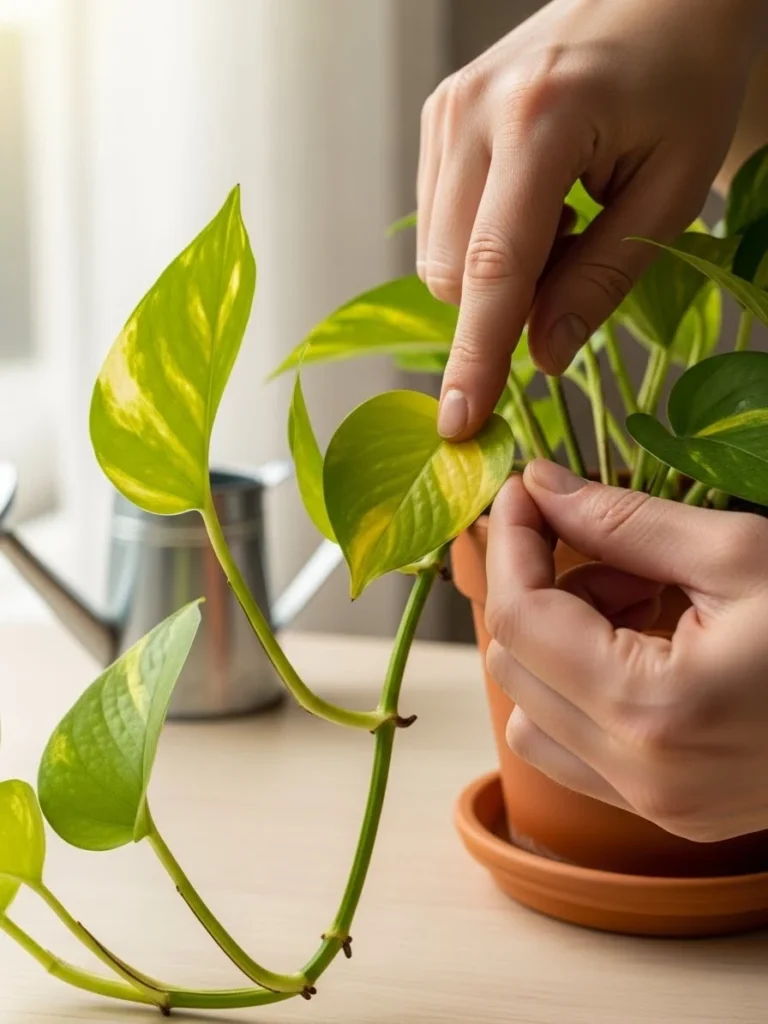
Why are my Pothos leaves turning yellow?
Quick Answer: Yellow leaves typically indicate overwatering, though occasionally it’s natural aging or nutrient deficiency.
The Details: When roots sit in waterlogged soil, they can’t absorb oxygen properly and begin to rot. This prevents nutrient uptake, causing chlorophyll breakdown and yellowing leaves. Check your soil moisture—if it’s soggy or the pot lacks drainage holes, that’s your culprit. However, one or two yellow leaves on a mature plant is completely normal and just the plant shedding old foliage.
Why does my Pothos have brown tips?
Quick Answer: Brown, crispy leaf tips usually result from inconsistent watering (swinging between bone-dry and soaking wet) or low humidity.
The Details: Pothos aren’t tropical humidity divas, but they appreciate 40-60% relative humidity. If your home is particularly dry (especially during winter heating), leaf tips may brown. The solution? More consistent watering using the finger test, and occasionally misting the leaves or placing a pebble tray with water beneath the pot.
My Pothos is losing its variegation—what’s wrong?
Quick Answer: Loss of white, yellow, or cream variegation means your plant isn’t getting enough light.
The Details: Variegated Pothos varieties (like ‘Marble Queen’ or ‘N’Joy’) produce less chlorophyll in their white/yellow sections. When light is insufficient, the plant compensates by producing more green, chlorophyll-rich growth to maximize photosynthesis. Move your plant closer to a window—you should see new growth emerge with better variegation patterns.
Why are my Pothos stems getting leggy and sparse?
Quick Answer: Leggy growth with long gaps between leaves is a classic sign of insufficient light.
The Details: In low light, Pothos enters “searching mode,” sending out long stems desperately seeking brighter conditions. The result is an unattractive, sparse plant. Prune back the leggy stems to encourage bushier growth, then move the plant to brighter (but still indirect) light.
Beyond the Basics: Advanced Pothos Care Tips
Soil Matters: Use a well-draining potting mix designed for aroids or houseplants. The soil should hold some moisture but never stay waterlogged. A mix of potting soil, perlite, and orchid bark works beautifully.
Feeding Your Pothos: During the growing season (spring and summer), feed monthly with a balanced, water-soluble fertilizer diluted to half strength. In fall and winter, reduce to every 6-8 weeks or skip feeding entirely.
Pruning for Fullness: Don’t be afraid to trim your Pothos! Cutting just above a node (where leaves meet the stem) encourages the plant to branch out and grow fuller. Plus, those cuttings propagate easily in water.
The Humidity Sweet Spot: While Pothos aren’t demanding, they appreciate occasional humidity boosts. Grouping plants together or running a humidifier during dry winter months keeps leaves glossy and healthy.
Your Pothos Care Action Plan
You now understand that caring for a Pothos plant isn’t about following rigid rules—it’s about responding to your specific plant in its specific environment. Remember these key principles:
- Light drives everything: Match your watering frequency to your light conditions
- Use the finger test: Your plant will tell you when it’s thirsty
- Watch for warning signs: Your Pothos communicates through its leaves
- Don’t panic over perfection: These plants are incredibly forgiving
With this knowledge, your Pothos won’t just survive in your home—it will thrive, trailing beautiful vines and purifying your air for years to come. The difference between a struggling plant and a show-stopping one comes down to understanding these fundamentals of light and water, and how they dance together.
Looking to expand your plant collection? Check out our guides on propagating Pothos from cuttings or creating the perfect soil mix for aroids.
What do you think of blogging? Did it benefit you?
There are no reviews yet. Be the first one to write one.