


Table of Contents
Stop killing your plants with kindness. If you’ve ever felt guilty about forgetting to water your houseplants, the ZZ plant might just be your perfect match. This remarkable tropical beauty actually thrives on neglect—and there’s a fascinating biological reason why. Understanding how to care for zz plant properly means learning to do less, not more.
Quick Care Summary
| Requirement | Ideal Condition |
|---|---|
| Light | Low to Bright Indirect (Avoid direct sun) |
| Water | Every 2–4 weeks (Allow soil to dry 100%) |
| Soil | Chunky, well-draining (Cactus/Perlite mix) |
| Toxicity | Toxic to pets/humans if ingested (Calcium Oxalate) |
| Scientific Superpower | CAM Photosynthesis (Stores oxygen/water at night) |
What Is a ZZ Plant? (More Than Just “Easy”)
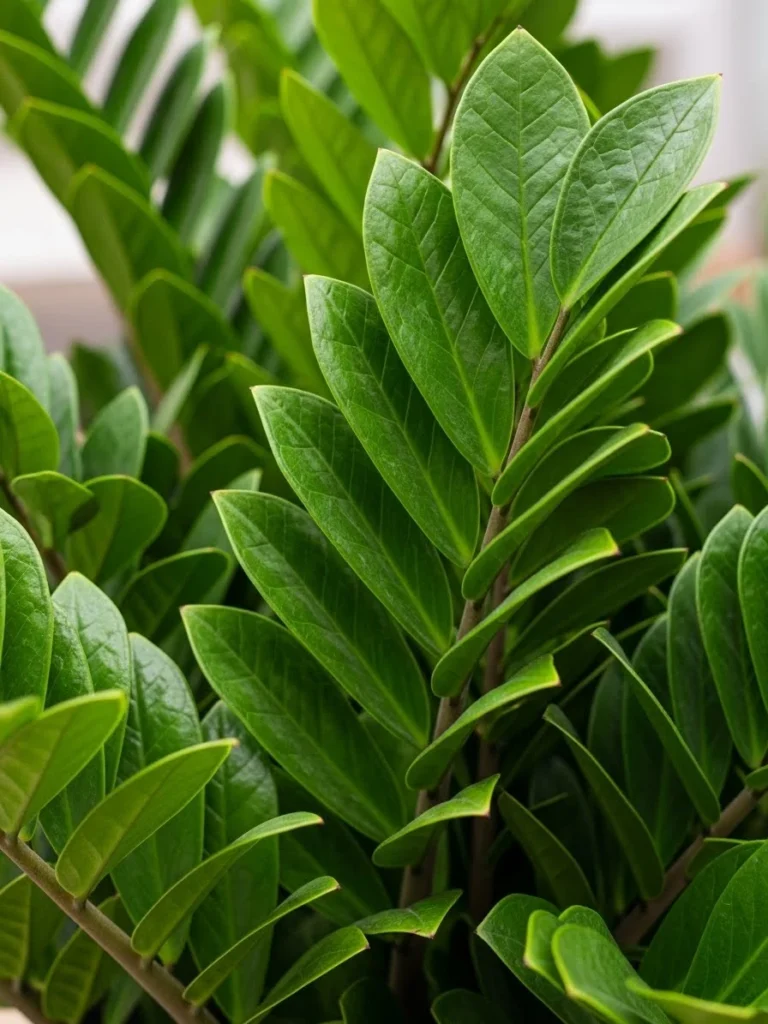
The Zamioculcas zamiifolia is a tropical perennial native to Eastern Africa, ranging from Kenya to South Africa. But what makes this plant truly special isn’t just its exotic origins—it’s what lies beneath the surface.
At the base of those glossy green stems, you’ll find potato-like structures called rhizomes. Think of these rhizomes as a camel’s hump for your plant. They store water and nutrients for months, allowing the ZZ plant to survive extended periods of drought. This built-in survival system is why zamioculcas zamiifolia care is so forgiving compared to other houseplants.
When you understand this storage mechanism, suddenly everything about caring for this plant makes sense. Those rhizomes are your plant’s insurance policy against forgetful owners.
The “CAM Photosynthesis” Secret (Why You’re Overwatering)
Here’s where ZZ plant care gets interesting. Unlike most houseplants, the ZZ plant uses CAM Photosynthesis—a specialized metabolic pathway that opens its pores at night instead of during the day.
Why does this matter? Most plants keep their stomata (tiny pores) open during daylight to absorb carbon dioxide. The ZZ plant does the opposite, opening its pores at night to minimize water loss. During the day, it stays in “storage mode,” processing the carbon dioxide it collected overnight.
The critical mistake: If you water your ZZ plant frequently like a typical houseplant, you’re drowning it while it’s trying to conserve resources. The rhizomes can’t handle constant moisture when the plant is programmed for drought conditions.
The solution: Treat your ZZ plant like a cactus, not a fern. This single mindset shift will transform your care routine.
Lighting: Can It Really Survive in the Dark?
Does the ZZ Plant need sunlight?
The short answer: It survives in low light but thrives in bright indirect light. The ZZ plant’s reputation as a “low-light champion” is both its blessing and its curse. Yes, it tolerates dim conditions better than almost any other houseplant, but “tolerates” doesn’t mean “prefers.”
Here’s the lighting breakdown:
- Best: Near an East-facing window where it receives gentle morning light
- Good: 5–10 feet from a South-facing window with filtered brightness
- Okay: Windowless office spaces with fluorescent lighting
In lower light conditions, your ZZ plant will survive but grow very slowly. Give it more light, and you’ll see faster growth with darker, more vibrant foliage. Just avoid direct sunlight—those glossy leaves can actually scorch, turning brown and crispy at the edges.
Watering: The “Soak and Dry” Method
How often should I water my ZZ Plant?
Only when the soil is 100% dry—typically every three weeks in summer and every six to eight weeks in winter. This is where most plant parents go wrong with their how to care for zz plant approach.
The test is simple: Stick your finger two inches into the soil. If it feels even slightly damp, wait. Those rhizomes are still working through their stored water reserves.
When you do water, water thoroughly until it drains from the bottom. Then leave it completely alone until the soil dries out entirely.
Troubleshooting Guide
| Problem | Diagnosis | Solution |
|---|---|---|
| Yellow leaves | Overwatering (rotting rhizomes) | Reduce watering frequency, check for root rot |
| Wrinkled stems | Underwatering (dehydrated rhizomes) | Water thoroughly, then resume normal schedule |
| Brown leaf tips | Salt buildup or fluoride sensitivity | Use filtered water, flush soil occasionally |
Soil & Repotting (The Anti-Rot Strategy)
Don’t just grab any “well-draining” soil—be specific. The ideal mix for zamioculcas zamiifolia care is:
- 50% Standard Potting Soil
- 25% Perlite (for aeration)
- 25% Orchid Bark (for chunky drainage)
This combination ensures water moves through quickly while providing enough nutrients. The chunky texture prevents the soil from compacting and suffocating those precious rhizomes.
Pot selection matters: Drainage holes are non-negotiable. Without them, excess water has nowhere to go, and root rot becomes inevitable. Choose terracotta or ceramic pots with adequate drainage—they’re worth the investment.
Repotting schedule: ZZ plants grow slowly and actually prefer being slightly root-bound. Repot only when rhizomes are pushing against the pot edges, typically every two to three years.
Is the ZZ Plant Toxic? (Safety First)
Yes, the ZZ plant contains calcium oxalate crystals in all parts—leaves, stems, and rhizomes. These microscopic crystals cause irritation if ingested or if sap contacts skin.
Important precautions:
- Keep away from curious cats, dogs, and small children
- Wash hands after handling or pruning
- Wear gloves when repotting
- Don’t place near food preparation areas
The toxicity level is considered mild to moderate. While it won’t cause severe harm to adults who accidentally touch it, pets and children are more vulnerable. Place it on high shelves or in rooms where pets don’t roam.
Real Benefits: Air Purification
Beyond its easy-care nature, the ZZ plant offers genuine air-quality benefits. According to NASA’s Clean Air Study, this plant effectively removes specific toxins from indoor environments:
- Xylene (found in paint and plastics)
- Toluene (common in adhesives)
- Benzene (present in cigarette smoke and gasoline)
While one plant won’t transform your home into a pristine air sanctuary, having several ZZ plants contributes to cleaner indoor air. Those glossy leaves aren’t just attractive—they’re actively working to filter your environment.
Frequently Asked Questions
Q: Can I use leaf shine on my ZZ plant?
No. Commercial leaf shine products clog the stomata (tiny pores) that the plant uses for gas exchange during its nighttime CAM cycle. Instead, gently wipe leaves with a damp cloth every few months to remove dust. This simple cleaning allows the plant to “breathe” properly while maintaining that natural glossy appearance.
Q: Why is my ZZ plant not growing?
Your plant is likely dormant or receiving insufficient light. ZZ plants grow very slowly under the best conditions—in low light, growth nearly stops. Move it closer to a window for three to six months and observe. Remember, even healthy ZZ plants might only produce a few new stems per year.
Q: Can ZZ plants grow in water?
While you can propagate ZZ plant cuttings in water temporarily, long-term hydroponic growth isn’t ideal. Those rhizomes evolved for soil environments and drought conditions. Once roots develop in water (usually after several months), transplant to soil for best results.
Q: Do ZZ plants need fertilizer?
Minimal feeding is sufficient. Apply a diluted balanced fertilizer (10-10-10) only during spring and summer, no more than once every two months. Overfertilizing causes more problems than underfeeding—remember, this plant evolved in nutrient-poor conditions.
The Bottom Line
ZZ plant care made simple truly means embracing simplicity itself. This isn’t a plant that demands constant attention or rewards hovering plant parents. It thrives when you:
- Provide bright indirect light (but tolerate low light)
- Water only when completely dry
- Use chunky, well-draining soil
- Leave it alone between waterings
Your biggest challenge won’t be keeping it alive—it’ll be resisting the urge to overcare for it. Trust the science of those rhizomes and CAM photosynthesis. Sometimes the best thing you can do for your plants is benign neglect.
Ready to expand your indoor jungle? The ZZ plant proves you don’t need a green thumb to enjoy beautiful, thriving houseplants. You just need to understand what makes them tick—and then get out of their way.
Have you successfully grown a ZZ plant, or are you struggling with specific care challenges? Share your experiences in the comments below, and let’s learn from each other’s plant journeys.
What do you think of blogging? Did it benefit you?
There are no reviews yet. Be the first one to write one.